
It started under a blacklight.
One of our longtime clients was dancing the night away at a warehouse rave in downtown Los Angeles. The music pulsed, the crowd shimmered in neon waves, and as the lights shifted to ultraviolet, her wrist caught a strange glow. Her diamond bracelet, usually brilliant in the sunlight, revealed an unexpected irregularity: some of the stones lit up blue. The majority of the others didn’t.
At first, she thought something was wrong. Were the diamonds fake? Was there a flaw?
The next morning, she called us.
What she noticed is something most people never see, and many jewelers rarely explain: diamond fluorescence. It’s not a defect, but a fascinating natural phenomenon rooted in chemistry, physics, and a bit of mystery.

The Science of Fluorescence
Diamonds are formed deep within the Earth under immense heat and pressure. During their formation, they sometimes pick up trace elements—minute amounts of atoms that are not carbon (the main ingredient of a diamond). When diamonds contain trace amounts of elements like nitrogen or boron, their crystal lattice may become slightly distorted. These distortions can create areas in the diamond that respond to ultraviolet light by emitting visible light, most commonly a soft blue glow.
This is called fluorescence.
Technically speaking, when UV light hits a fluorescent diamond, the electrons in the trace elements absorb energy and temporarily jump to a higher energy state. As they return to their normal state, they release that energy as visible light. The process is instantaneous, and the glow disappears the moment the UV light is gone.
Most fluorescent diamonds glow blue, but rare ones can glow yellow, white, orange, or even green, depending on the specific elements involved.

How Common is Fluorescence in Diamonds?
According to GIA (Gemological Institute of America), about 25% to 35% of diamonds exhibit some degree of fluorescence. Of these, most are categorized as faint to medium. Only about 10% show strong or very strong fluorescence.
So what does that mean aesthetically?
The Aesthetic Debate: Beauty vs. Bias
In normal lighting conditions, most people cannot detect whether a diamond fluoresces. In fact, faint to medium fluorescence has no noticeable effect on a diamond’s appearance. However, in rare cases, very strong blue fluorescence can make a diamond appear hazy or milky in daylight. On the flip side, in some lower-color diamonds (like J, K, or L), strong fluorescence can actually make the stone look whiter and more appealing.
Still, there has long been a bias in the diamond industry against fluorescence. Older valuation systems and some dealers historically treated it as a flaw, despite the fact that many customers enjoy the unexpected glow under UV light. Today, educated buyers and collectors are more open-minded, and in certain circles, fluorescence is becoming trendy—even desirable.
And then there are people who lean fully into the magic.
Yael Designs: Our Fluorescence Philosophy
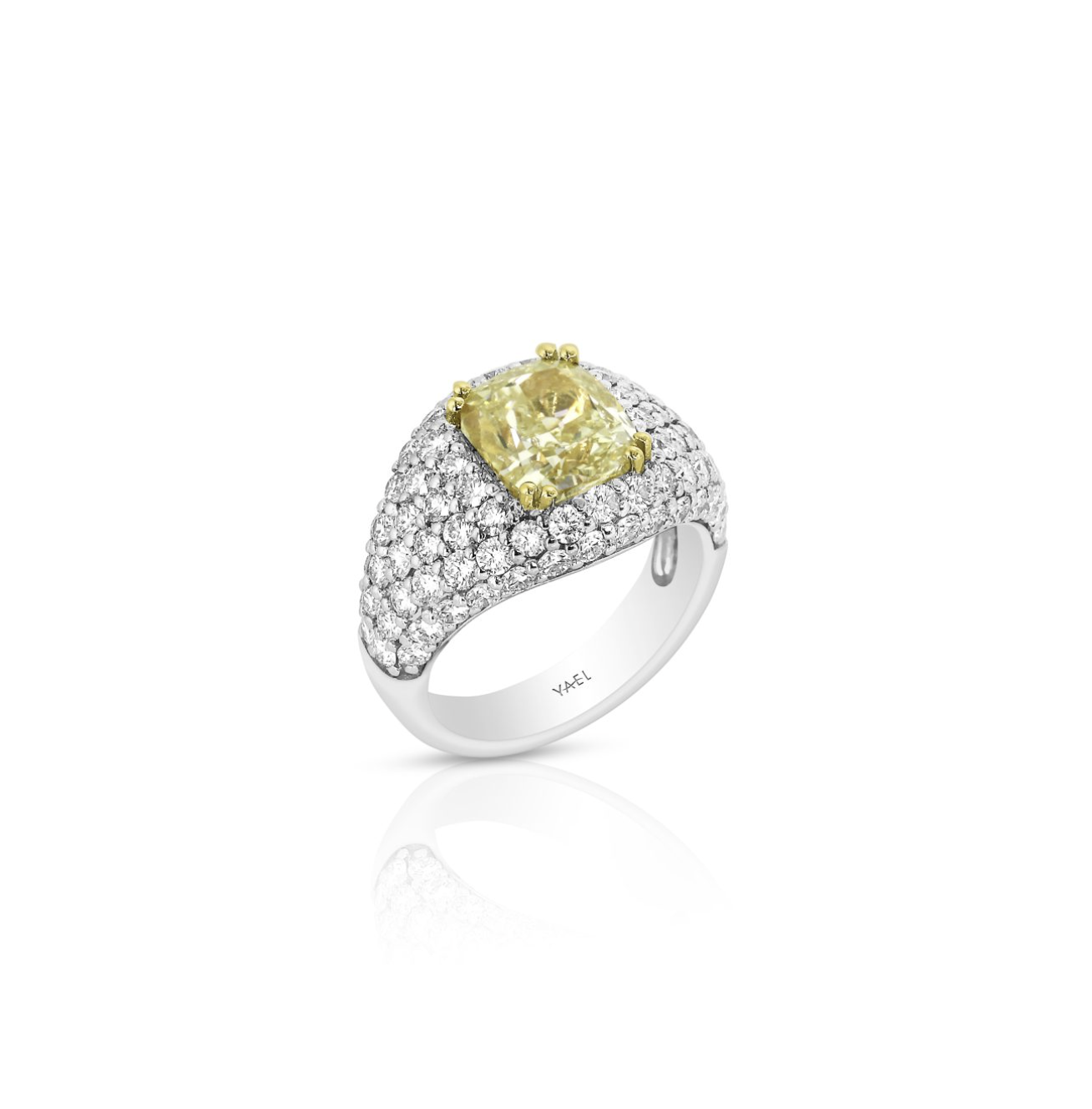
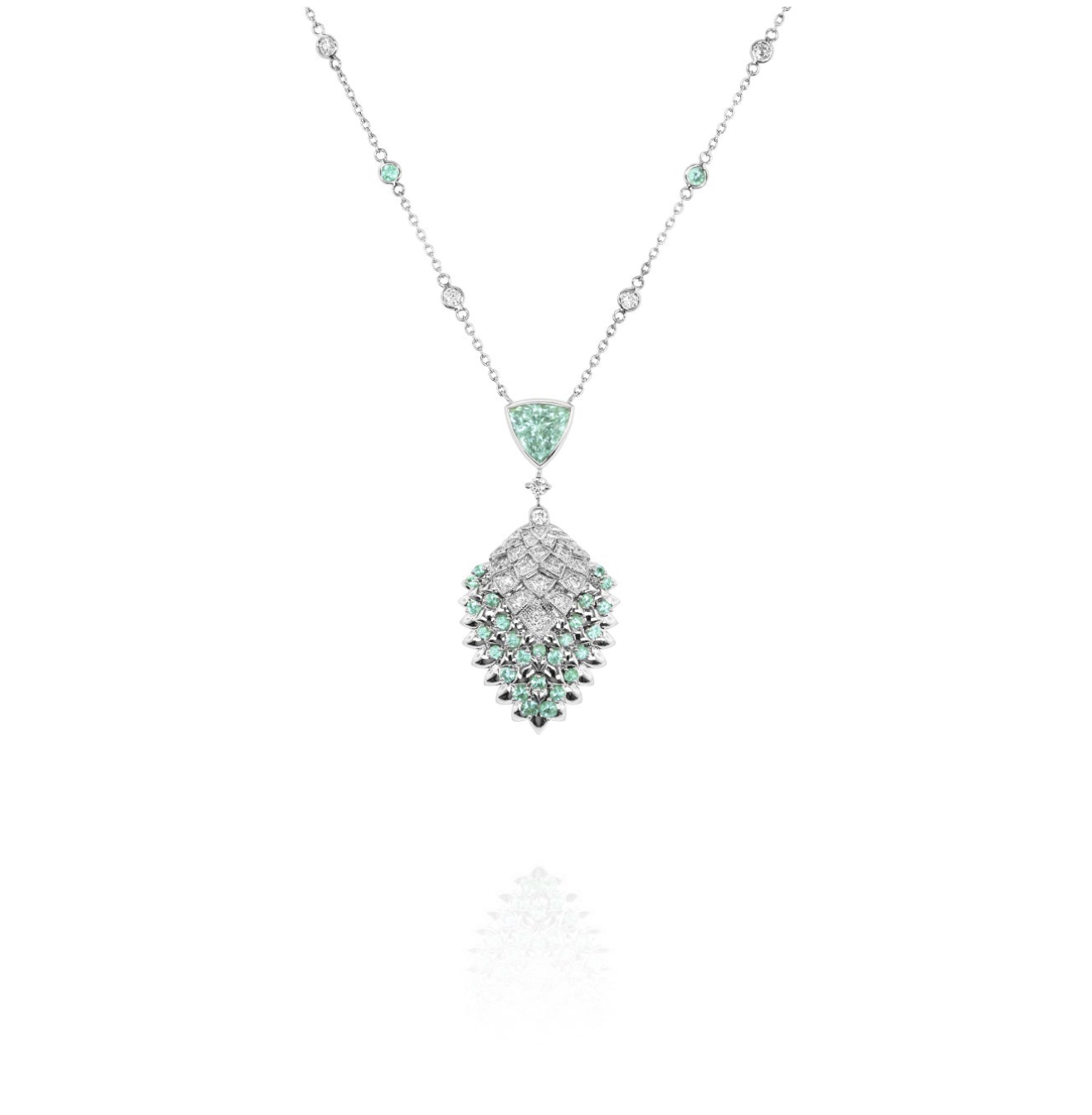
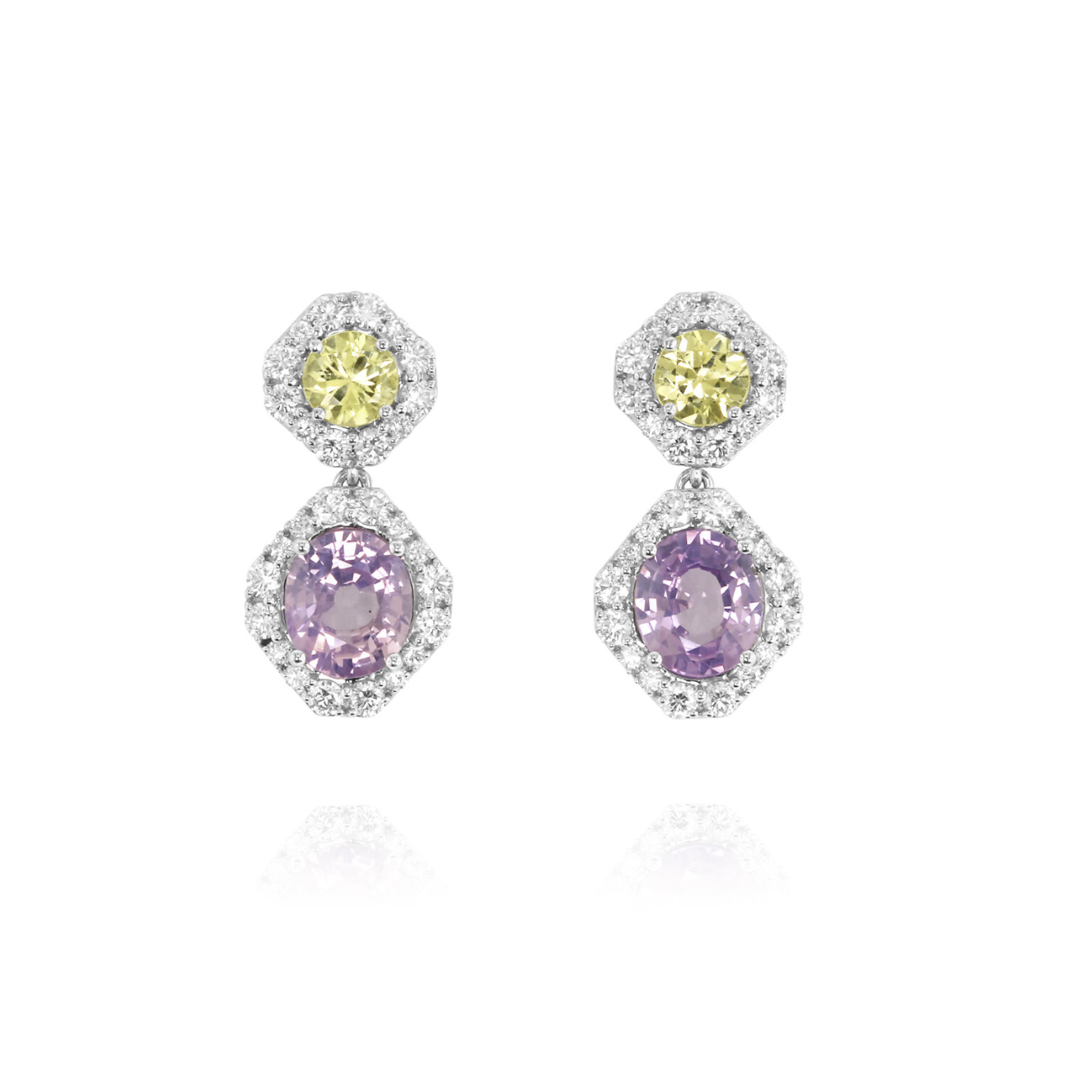
At Yael Designs, we believe diamonds should be as consistent as the craftsmanship around them. That’s why, for the vast majority of our fine jewelry collections; including diamond engagement rings, bracelets, earrings, and necklaces; we source diamonds that are free of fluorescence, which started as policy following the story at the beginning of this post. We want our luxury jewelry to perform predictably under all lighting conditions: bright showroom lights, candlelit dinners, or even a Las Vegas nightclub.
Our clients trust that what they see is what they get: crisp, clean brilliance.
However, we also recognize that jewelry is personal. For some, the dream is consistency. For others, it’s customization.
That’s why we offer select bespoke services for clients who want their diamonds to glow. For one avant-garde collector, we sourced only highly fluorescent diamonds alongside a brightly fluorescent ruby set into a custom cocktail ring. The result? A piece that looked classically elegant in daylight and absolutely ethereal under blacklight.
And then came our favorite custom project yet.
A Hidden Message in Light
A client came to us with an unusual request: she wanted an anniversary ring that said something special—but only when the moment was right. Together, we designed a wide platinum band set with a line of seemingly uniform diamonds. But in reality, some of those stones were highly fluorescent, while others were not.
Under UV light, a secret phrase appeared in glowing blue letters, spelled out by the placement of the fluorescent stones. During the day, it looked like a classic eternity band. In the darkness, in the right setting, it whispered a hidden message only she and her husband understood.
It was romantic. It was rebellious. It was unforgettable.
And it reminded us that jewelry, at its best, is more than ornament. It’s storytelling.
A Glow All Your Own
If you’re shopping for diamonds and wondering about fluorescence, here’s our honest take:
- If you want consistency across lighting conditions, go with non-fluorescent diamonds. They offer a crisp, classic sparkle no matter where you are.
- If you want something unique, surprising, and maybe even a little mystical, consider fluorescence. Whether faint or strong, it adds a layer of character that can’t be seen until the moment is right.
At Yael Designs, we specialize in ethically sourced, expertly crafted fine jewelry that speaks to your individuality. Whether you’re exploring timeless diamond engagement rings, bold custom designs, or one-of-a-kind pieces that glow under UV light, we’re here to help you make the choice that fits your style and your story.
Every stone has a secret. Sometimes, it just takes the right light to see it.